There is a moment, usually around 4,000 meters (13,123 feet), where the world shifts. The dense, humid rhododendron forests of the lower valleys thin out into gnarled juniper scrub. The air turns crisp, carrying a distinct bite of alpine chill, and the horizon opens up to reveal jagged, white-capped giants that seem to pierce the deep blue stratosphere.
Trekking at high altitude is more than just a physical challenge; it is a pilgrimage into one of the planet’s most pristine and unforgiving environments. Whether you are eyeing the classic routes of Nepal or seeking the rugged, isolated paths of Bhutan, stepping into the thin-air zone requires meticulous preparation, physical stamina, and profound respect for the mountain.
This comprehensive guide covers everything you need to know to transition from a valley hiker to a high-altitude trekker, ensuring you reach the pass safely and enjoy every breathtaking step.
1. Understanding High Altitude and Your Body
High-altitude trekking means hiking at elevations usually above 2,500 meters. The air gets thinner, the weather changes fast, and your body needs extra time to adjust. Trails in Nepal, the Himalaya, the Andes, and the Alps often fall into this category.
In high-altitude trekking, your primary challenge isn’t vertical gain or heavy packs—it’s the atmospheric pressure. As you ascend, the air pressure drops, meaning gas molecules (including oxygen) are spread further apart. At 5,000 meters, each breath you take delivers roughly half the oxygen molecules compared to sea level.
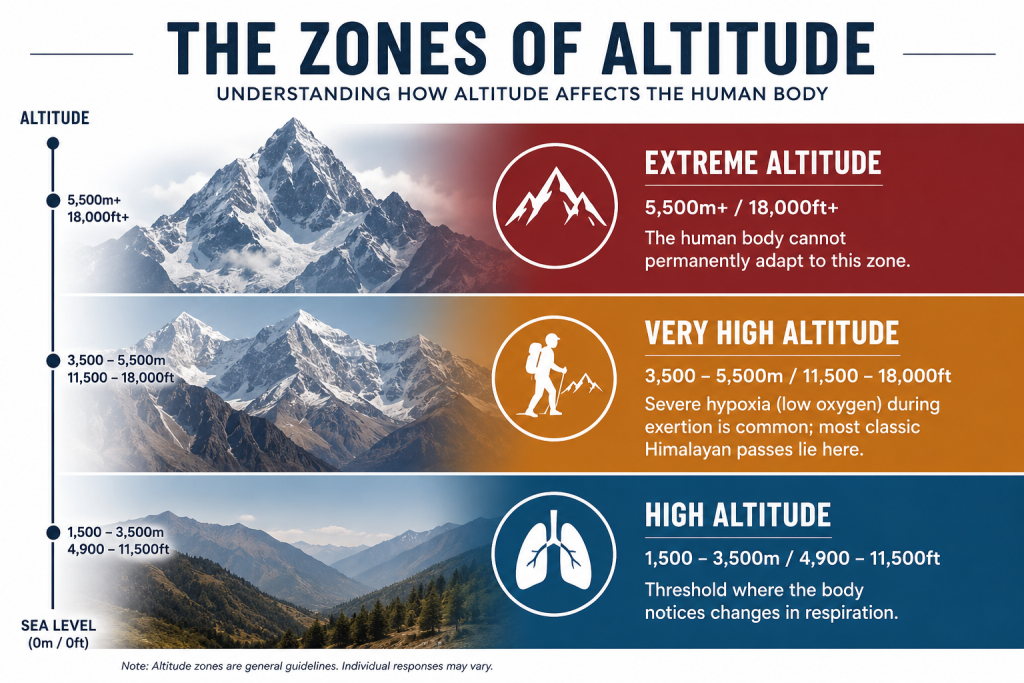
The Zones of Altitude:
- High Altitude (1,500 – 3,500m / 4,900 – 11,500ft): Threshold where the body notices changes in respiration.
- Very High Altitude (3,500 – 5,500m / 11,500 – 18,000ft): Severe hypoxia (low oxygen) during exertion is common; most classic Himalayan passes lie here.
- Extreme Altitude (5,500m+ / 18,000ft+): The human body cannot permanently adapt to this zone.
To experience these zones sustainably, consider iconic routes like the Lobuche Peak Climbing with Everest Base Camp Trek or the expansive Thorong Peak & Annapurna Circuit Trek.
2. Acclimatization: The Golden Rule of Bistari, Bistari
In the Himalayas, you will frequently hear guides chant the phrase “Bistari, bistari”—slowly, slowly. Your body has an incredible capacity to adapt to low-oxygen environments by producing more red blood cells, but this biological alchemy takes time.
Key Strategies for Acclimatization:
- Climb High, Sleep Low: During acclimatization days, hike 300–500 meters higher than your tea house, spend an hour absorbing the altitude, and descend to sleep. This triggers red blood cell production without over-stressing the body overnight.
- Cap Your Daily Ascent: Above 3,000 meters, limit your net sleeping elevation gain to no more than 400–500 meters per day, and take a dedicated rest day every 1,000 meters.
- Hydrate Relentlessly: The air at high altitudes is incredibly dry, and your respiration rate doubles. Drink 4 to 5 liters of water daily. Electrolyte tablets and warm herbal teas can make this easier.
3. Recognizing and Managing Altitude Illnesses
Ignoring symptoms is the single biggest mistake a trekker can make. Mild symptoms are your body’s way of saying, “Hold on, I’m adapting.” Severe symptoms are a command to descend immediately.
Acute Mountain Sickness (AMS)
Think of AMS as a severe hangover. Symptoms include a throbbing headache, fatigue, dizziness, loss of appetite, and mild nausea.
- Action: Stay at your current altitude, rest, hydrate, and take mild analgesics. If symptoms don’t improve within 24 hours, descend.
HAPE and HACE (The Red Flags)
- High Altitude Pulmonary Edema (HAPE): Fluid buildup in the lungs. Indicated by a persistent wet cough, breathlessness while resting, and blueish lips or fingernails.
- High Altitude Cerebral Edema (HACE): Fluid buildup in the brain. Indicated by confusion, slurred speech, and an inability to walk a straight line (ataxia).
- Action: Both are life-threatening emergencies. Immediate descent of at least 1,000 meters is non-negotiable. Supplemental oxygen and hyperbaric chambers should be used if available.
4. Training and Physical Preparation
You don’t need to be an Olympic athlete, but high-altitude trekking requires excellent cardiovascular endurance and a resilient musculoskeletal system. Start training 3 to 4 months before your departure.
- Zone 2 Cardio Training: Focus on long, slow, low-intensity cardio (hiking, cycling, rowing, swimming) for 1–3 hours. This builds your aerobic base, making your heart and lungs highly efficient at processing limited oxygen.
- Weighted Stair Climbs: Find a stadium or local hill, load a backpack with 5–10kg, and walk up and down. This mimics the exact impact your quadriceps and knees will face on steep Himalayan descents.
- Core and Leg Strength: Incorporate squats, lunges, planks, and step-ups into your routine to support your joints under load.
5. Gear Essentials: Layering for Volatile Weather
Weather in high alpine environments changes with alarming speed. You can start the morning sweating in a T-shirt and end the afternoon shivering in a heavy blizzard. The secret lies in a technical three-layer system:
- Base Layer (Moisture Management): Merino wool or high-quality synthetic thermals. Avoid cotton entirely—it holds sweat and will freeze against your skin when you stop walking.
- Mid Layer (Insulation): A breathable fleece or grid-fleece for moving, coupled with a high-loft down jacket (minimum 800-fill power) to throw on during breaks and chilly evenings at the tea house.
- Outer Shell (Weather Protection): A fully waterproof, windproof, and breathable jacket (Gore-Tex or similar) with pit-zips for temperature regulation.
Footwear & Trekking Poles
Do not skimp on your footwear. Invest in sturdy, high-traction, waterproof hiking boots with excellent ankle support, and break them in months before your trip. Additionally, a pair of adjustable trekking poles will reduce the impact on your knees by up to 25% on steep descents.
6. Choosing Your Epic High-Altitude Adventure
If you are ready to put your preparation to the test, the Himalayas offer some of the most spectacular high-altitude journeys on earth. Here are four premier options managed by local experts:
- The Quintessential Icon: The Lobuche Peak Climbing with Everest Base Camp Trek takes you through the heart of Sherpa culture to the foot of the world’s highest peak, peaking at Kala Patthar (5,545m).
- The Diverse Giant: For sweeping transitions from sub-tropical valleys to the high-alpine crossing of the Thorong La Pass (5,416m), look no further than the iconic Thorong Peak & Annapurna Circuit Trek.
- The Off-The-Beaten-Path Odyssey: For trekkers seeking complete wilderness and uncrowded wilderness trails, the Manaslu Expedition provides dramatic vistas around the world’s eighth-highest mountain, crossing the formidable Larkya La Pass (5,106m).
- The Ultimate High-Altitude Wilderness: If you want a deep dive into pristine high valleys with rare cultural authenticity, explore our tailored Langtang Valley & Gosaikunda Trek to cross the high alpine lakes and Lauribina Pass (4,610m).
7. Mental Resilience and Mountain Ethics
Ultimately, the most critical piece of gear you can bring to the Himalayas is your mindset. High-altitude trekking involves discomfort: cold nights, basic alpine accommodation, simple food, and physical exhaustion. Embrace the simplicity of the trail.
At the same time, practice strict mountain ethics. Pack out all your non-biodegradable waste, support the local economy by purchasing goods from local tea houses, and respect local traditions by always passing Mani stones, chortens, and prayer flags on your right-hand side.
The mountains have a way of stripping away the noise of modern life, leaving you with nothing but your breath, your footsteps, and a deep appreciation for nature’s scale. Prepare diligently, listen to your body, and let the thin air transform you.

